You’re offline. This help page still works as a reference. A fresh AI diagnosis needs an internet connection.
Appliance help
Dishwasher help
A dishwasher is a heated, circulating wash with a drain pump and a filter that is meant to be cleaned. Cloudy glasses, wet plastic on the top rack, or a puddle on the floor each point at different parts of that loop. None of them are fixed by pouring more rinse aid into a blocked filter.
Reading this page does not start a chat. If you already have a diagnosis in progress, we will ask before replacing it.
Common problems
Short, honest explanations — not a parts catalogue. If it matches what you are seeing, you can take that wording into a diagnosis.
Standing water / will not drain
Water left over the heating element or sloshing in the base is a drain-path problem: filter, pump, or drain hose (including a high loop or sink waste that is backing up). Run a drain-only or cancel, then check the filter before calling it a dead pump.
If the spray arms cannot spin or the jets are blocked with food, nothing else in the chemistry will save the wash. Overloading, a clogged filter, and a dead wash pump all look similar until you spin the arms by hand (machine off).
Hard water, too much detergent in a soft-water area, or rinse aid empty can all haze glass. That is not the same as a heater that never gets the water hot — greasy soil left on plates is a heat or wash-pump clue, not a rinse-aid clue.
Foam from the wrong detergent (washing-up liquid is a classic) overflows the door. A torn door seal, a blocked salt cap, or a machine that is not level can also weep. Wipe the foam, don’t keep restarting into suds.
Inlet hoses have a flood-stop jacket on many UK installs — if that bladder has tripped, the hose is designed to refuse water. Check the tap under the sink and whether the hose feels swollen.
Food in the filter and a stagnant sump smell like a drain. Clean the filter, run a hot empty cycle with dishwasher cleaner if you use it, and do not store wet dishes in a sealed machine for days.
Switch the appliance off at the wall first unless the check is only looking at a display. Stop if anything in Stop and get help applies.
Twist-out filter
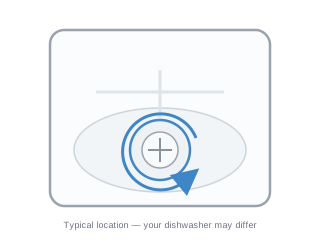
Remove the bottom basket. The cylindrical filter usually twists anticlockwise from the floor of the tub. Rinse it under the tap. If the mesh is torn, it will not strain food — that is a part, not a rinse.
The filter sits in the base, usually under the bottom spray arm. Typical layout — yours may differ.
Spray arms
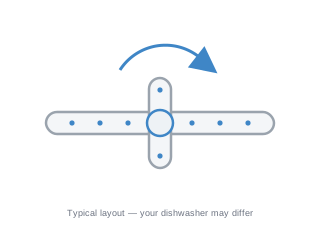
Check the lower (and upper) arm spins freely and the jet holes are not plugged with seeds or grit. Most arms unclip or unscrew at the centre. Rinse them; do not poke metal into ceramic jets.
Spray arms need to spin and the jets need to be open. Layout varies by model.
Salt, rinse aid, and the right detergent
If you have a water softener, keep salt filled and the cap tight — a loose cap dumps salt water into the tub and corrodes steel. Rinse aid helps glass. Never use washing-up liquid.
Stop and get help
These are the points where another cycle, another click, or a screwdriver makes things worse. ApplianceClinic is not a repair company and will not send an engineer to you.
Water on the kitchen floor near sockets
Isolate power. Under-sink sockets and a leaking inlet hose are a bad mix.
RCD trips mid-cycle
Often the heater. Do not keep resetting to “just finish the plates”.
Burning or melted plastic smell
Stop. A utensil on the element or a failing heater can scorch. Let it cool before you look.
Know your appliance
Names you may hear in a diagnosis, in plain language. This is identification, not a strip-down guide.
Wash pump versus drain pump
Two different jobs. Drain pump empties. Wash pump (sometimes the same housing, sometimes not) blasts the arms. “It fills and sits” is drain. “It drains but never washes” is circulation or arms.
Heater / heat pump
Hot water is how grease lifts. A machine that runs cold will leave food on. Measuring that heater is not a customer test.
Inlet valve and flood-stop hose
The hose with a chunky plastic jacket can be a one-trip safety part. Once it has ballooned, it is usually replaced as a hose, not reset.
Find your model number
Open the door and look on the side or top edge of the door, or on a sticker on the tub wall. Rear plates exist but are awkward behind kitchen plinths.
Photograph the door-edge sticker before the kitchen fitter’s plinth goes back on.
The FD or product number is more useful than the retail “model name” on the front.
When you start a diagnosis, use the camera button on the composer to photograph the plate. Conversations stay in your browser — they are not published as web pages.
Safety recalls and notices
UK Office for Product Safety and Standards notices that may affect dishwashers. ApplianceClinic does not issue recalls — check the official record before you act.
The assistant is the same conversation as the homepage. Describe what you have already checked. It will not run in the background, and it needs a network connection.