You’re offline. This help page still works as a reference. A fresh AI diagnosis needs an internet connection.
Appliance help
Washer dryer help
A washer dryer is one cabinet doing two jobs: a wash system (fill, wash, drain, spin) and a drying system (heat and airflow, often with a condenser and a fluff path). A fault that appears “on the dry” is not automatically the same as a standalone tumble dryer, and a wash leak is not a dry-heater problem. Treat the two halves separately when you describe what happened.
Reading this page does not start a chat. If you already have a diagnosis in progress, we will ask before replacing it.
Common problems
Short, honest explanations — not a parts catalogue. If it matches what you are seeing, you can take that wording into a diagnosis.
Washes but will not dry
If clothes come out washed and spun, the wash half did its job. Poor drying is then heat, airflow or condenser/water-tank related. Overloading a combo dryer is easy — the dry load limit is much smaller than the wash load. A machine that never gets warm on dry, with a clean filter, is a different story from one that is warm but still damp.
Lint in a washer dryer’s dry path is a fire-risk housekeeping issue. Clean the fluff filter every dry cycle if it has one, and do not ignore a burning-dust smell. If it trips the supply on dry only, stop using the dry programme.
The wash drain path is still a pump filter and hose, as on a washing machine. A combo unit can also leave extra water because a dry cycle expected a spun load. Standing water after wash is a drain problem first, not a dryer element.
Wash leaks (door, drawer, pump) are the same family as a washer. A leak only on dry can be condenser water that has nowhere to go — a full tank, a blocked condenser drain, or a cracked tank hose inside. Unplug before opening lower panels.
Combined programmes that wash then dry will abort or loop if spin failed, the load is huge, or the dryer cannot reach a target dryness. Note whether it stalled on wash, spin, or dry — that split is the useful fact.
The lock still follows water and temperature rules. A hot drum or remaining water can keep it shut. Wait it out; do not force it. If it stays locked when cold and empty, describe that as a lock fault, not a dry fault.
Switch the appliance off at the wall first unless the check is only looking at a display. Stop if anything in Stop and get help applies.
Dry load size
If you washed a full drum then pressed Dry, the machine is overloaded for drying. Take half the clothes out and try dry only. This is the most useful combo-specific check and costs nothing.
Fluff filter and condenser path
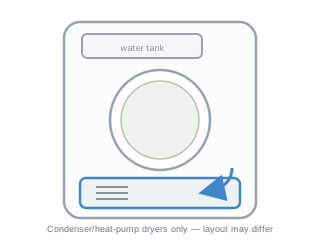
Where the machine has a fluff filter in the door or bellows, clean it every dry. Condenser washer dryers also need the condenser and water container emptied or cleaned — a full tank stops drying and can leak.
Many washer dryers collect water in a tank and use a condenser. Layout varies; this is a typical condenser-dryer arrangement, not a promise your model matches.
Wash pump filter
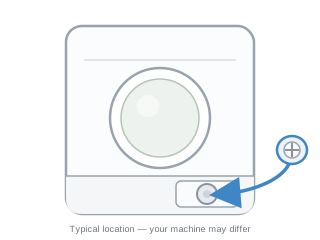
If the wash will not empty, use the same bottom-front filter check as a washing machine: isolate power, catch the water, twist the filter out.
The wash drain filter is usually at the bottom front, as on a washing machine.
Stop and get help
These are the points where another cycle, another click, or a screwdriver makes things worse. ApplianceClinic is not a repair company and will not send an engineer to you.
Burning smell on dry
Stop the dry programme, unplug, and do not run dry again until the fluff path is cleared or the machine is diagnosed. Lint plus heat is how laundry fires start.
Supply trips only on dry
A heater or fan that trips the RCD is an electrical fault. Leave dry unused. Wash-only may still be unsafe if the same supply circuit is involved — if in doubt, isolate the appliance.
Water around the socket
Same rule as any laundry machine: isolate power from a dry place. Do not open the back while it is wet and live.
Know your appliance
Names you may hear in a diagnosis, in plain language. This is identification, not a strip-down guide.
Two systems, one drum
Heaters, NTC sensors and condenser fans belong to dry. The drain pump, inlet valve and door lock belong to wash. Naming which programme failed keeps diagnosis honest.
Condenser / water tank
On condensing models, moisture from the clothes becomes water that must be pumped or poured away. A blocked condenser looks like “it doesn’t dry”, not like “the heater is dead” — until you have cleaned it.
Door boot
The rubber seal still traps gunge from wash, and can leak on spin. Combo machines do not get a free pass on seal hygiene.
Find your model number
Look on the door rim when the door is open, or on the rear panel. Washer dryer model numbers are specific — a “same looking” washer without dry is a different model. Photograph the whole sticker.
Note the rated wash load and dry load if printed; they are often different.
If you only use wash, still tell the assistant it is a washer dryer so the dry half is not invented.
When you start a diagnosis, use the camera button on the composer to photograph the plate. Conversations stay in your browser — they are not published as web pages.
Safety recalls and notices
UK Office for Product Safety and Standards notices that may affect washer dryers. ApplianceClinic does not issue recalls — check the official record before you act.
The assistant is the same conversation as the homepage. Describe what you have already checked. It will not run in the background, and it needs a network connection.