Runs but clothes stay wet
If the drum turns, the motor is doing something. Wet clothes then usually mean no useful heat or no useful airflow. Clean the filter, condenser (if it has one) and vents before assuming a heater or thermostat has failed.

Appliance help
A tumble dryer tumbles clothes through warm air, then gets rid of the moisture — either by venting it outside or by condensing it into a tank. Almost every “not drying” complaint starts with airflow. Heaters fail too, but a clogged fluff filter or condenser is the check that actually belongs to you.
Reading this page does not start a chat. If you already have a diagnosis in progress, we will ask before replacing it.
Short, honest explanations — not a parts catalogue. If it matches what you are seeing, you can take that wording into a diagnosis.
If the drum turns, the motor is doing something. Wet clothes then usually mean no useful heat or no useful airflow. Clean the filter, condenser (if it has one) and vents before assuming a heater or thermostat has failed.
Restricted airflow makes the machine work longer and run hotter. Overloading has the same effect. Heat-pump dryers especially hate a dirty filter — they dry cool and slowly when neglected, then error.
Condenser and heat-pump models collect water. If the tank is full every twenty minutes, or water appears at the bottom door, the pump-out path or condenser is blocked — or the tank is not seated.
Overheating is a stop-using-it moment if you smell scorching, see browning on clothes, or the machine trips. That is airflow or a safety thermostat doing its last job. Let it cool. Do not bypass thermal cut-outs.
Rattles can be a zip in the drum — empty it and look. A grinding drum with no clothes in it is bearings or rollers, which is a repair. Do not run a dryer that smells of hot rubber belt until it is checked.
Switch the appliance off at the wall first unless the check is only looking at a display. Stop if anything in Stop and get help applies.
Lift the filter from the door opening or rim, peel the fluff off, and slot it back fully. A half-seated filter can blow lint into the machine.
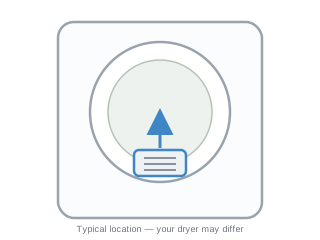
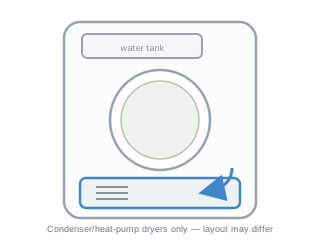
On condenser dryers the tank pulls out at the top; the condenser slides out behind a lower front flap. Rinse fluff off the condenser until the water runs clear. Switch off and let it cool first.
Vented dryers need an unobstructed hose to outside — not a crushed pipe behind the machine. All dryers need space around the back. A bone-dry cupboard with no air is a poor place to dry laundry.
These are the points where another cycle, another click, or a screwdriver makes things worse. ApplianceClinic is not a repair company and will not send an engineer to you.
Unplug if you can do it safely, get people out if there is smoke, and do not open a roaring dryer to “see”. Lint fires are real.
Leave it isolated. That is not a filter problem.
Stop using it. Overheat cut-outs exist because dryers start fires when airflow is gone.
Names you may hear in a diagnosis, in plain language. This is identification, not a strip-down guide.
Older vented and condenser models use a heater bank. Heat-pump models use a refrigeration circuit — not something to “top up” at home.
These open when the air gets too hot. Replacing them without fixing the blockage that caused the trip repeats the fault.
Metal strips in the drum that detect damp clothes. They fail, but filthy bars also lie — wipe them with a bit of white vinegar on a cloth, machine off.
Look around the door opening, just inside, or on a rear/side plate. Note whether it is vented, condenser or heat pump if the sticker says so — drying advice changes.
When you start a diagnosis, use the camera button on the composer to photograph the plate. Conversations stay in your browser — they are not published as web pages.
UK Office for Product Safety and Standards notices that may affect tumble dryers. ApplianceClinic does not issue recalls — check the official record before you act.
The assistant is the same conversation as the homepage. Describe what you have already checked. It will not run in the background, and it needs a network connection.