You’re offline. This help page still works as a reference. A fresh AI diagnosis needs an internet connection.
Appliance help
Washing machine help
A washing machine is a sealed tub that fills, washes, empties and spins. Most “it’s broken” moments are one of those steps failing — not a mystery computer. This page is a reference you can read without starting a chat: what is usually going on, what you can safely look at, and what you should leave alone.
Reading this page does not start a chat. If you already have a diagnosis in progress, we will ask before replacing it.
Common problems
Short, honest explanations — not a parts catalogue. If it matches what you are seeing, you can take that wording into a diagnosis.
Won’t drain
If the cycle sticks on empty, or there is standing water in the drum, the water cannot get out. On most UK machines that path is: drum → pump filter (behind a small flap at the bottom front) → drain pump → drain hose into a standpipe or sink waste. A blocked filter or a coin in the pump is common. Dirty water that comes back after a successful pump-out is often the household waste pipe, not the machine.
Spin needs a locked door, an empty sump, and a drum that can accelerate. A machine that washed but will not spin may be detecting an out-of-balance load, a door that did not lock, or water still in the drum. Do not force the drum round by hand while it is powered.
No water in, or a trickle then an error, usually means the tap is off, a kinked fill hose, or the small mesh filter in the hose connector is blocked with grit. A failed inlet valve is possible, but check the hose and tap first.
Where the water appears matters. Damp around the door often points to the rubber door seal (the boot). A wet detergent drawer can be overdosing or a blocked drawer. A puddle from underneath during empty can be a loose drain hose, a cracked filter housing, or a failed pump seal. Unplug before you look underneath, and do not run another cycle into a flood.
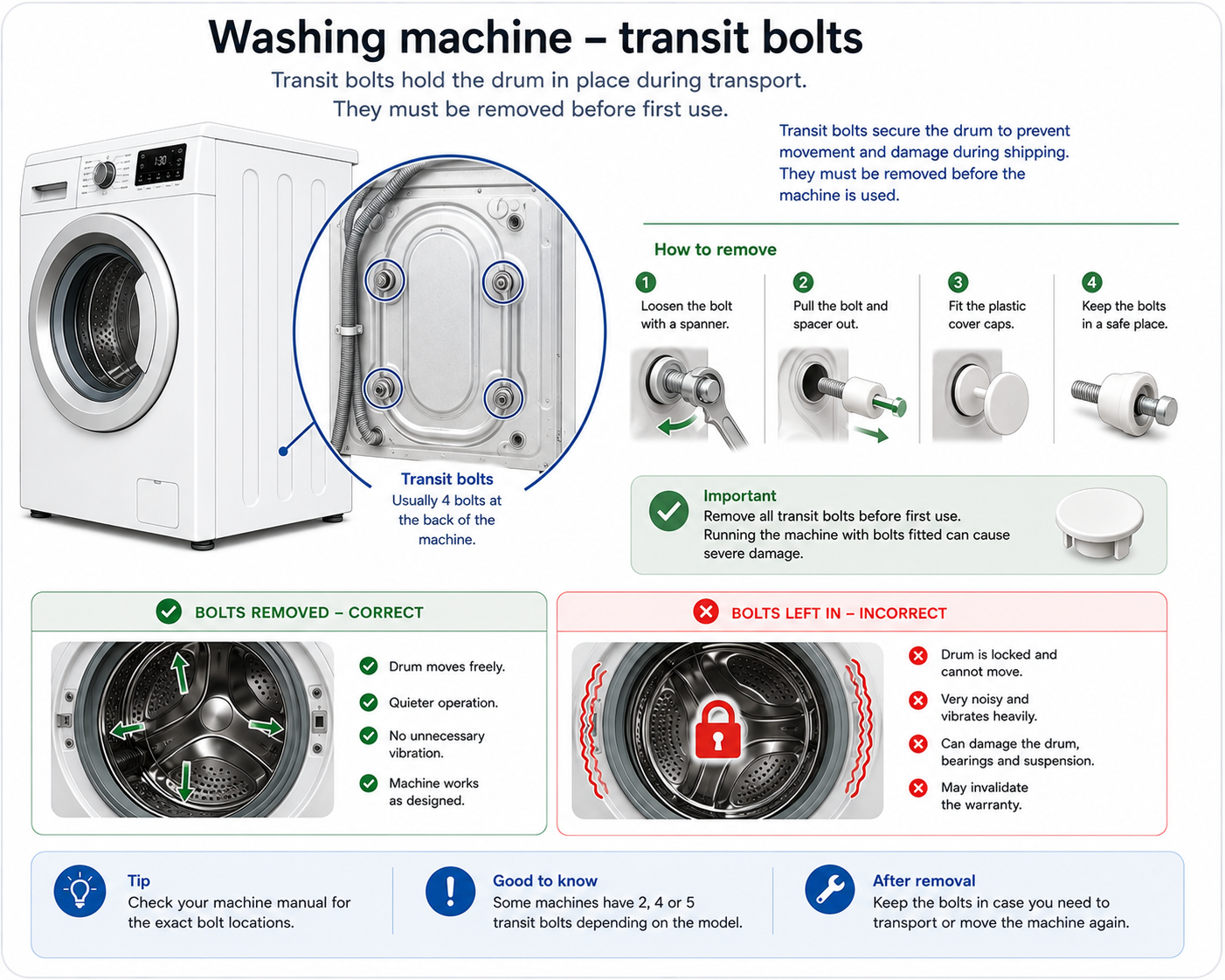
A new or recently moved machine that hammers on spin often still has transit bolts in the back — they hold the drum for delivery and must come out before use. An older machine that suddenly grinds or walks may have a lumpy load, unmet feet, or worn drum bearings (a repair, not a DIY strip-down).
The door lock (interlock) keeps the door shut during a wash. After a cycle, wait two or three minutes — many locks release on a delay. If the drum still has water, drain it first; the lock is designed not to open on a full tub. Do not lever the door.
A mouldy or “wet towel” smell usually lives in the door-seal fold and detergent drawer — wipe and rinse those. A sharp drain or sewer smell after emptying is more often the household trap or standpipe than the machine itself.
A code is a clue, not a parts list. The same letters mean different things on different brands. Photograph the display and describe what the machine was doing when it appeared — drain, spin, fill, or door — rather than searching the code on its own.
Switch the appliance off at the wall first unless the check is only looking at a display. Stop if anything in Stop and get help applies.
Pump filter (safe if you drain first)
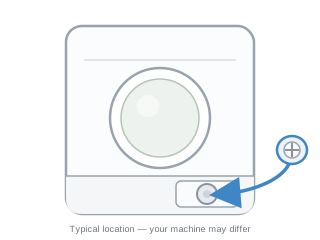
Switch the machine off at the wall. Open the bottom-front flap. Have a shallow tray and towel ready: a little water will come. Twist the filter out and pick out lint, coins and hair. Typical layout — yours may differ.
The pump filter is usually behind a small flap at the bottom front. Drain standing water first.
Fill-hose mesh
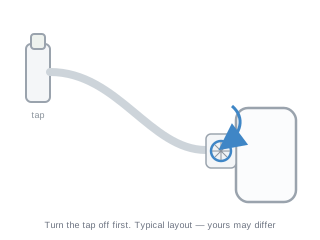
Turn the tap off. Unscrew the hose from the tap end and rinse the small mesh that catches grit. Do not lose the washer in the coupling.
A mesh filter sits inside the fill-hose connector at the tap. Typical layout — yours may differ.
Door-seal fold and detergent drawer
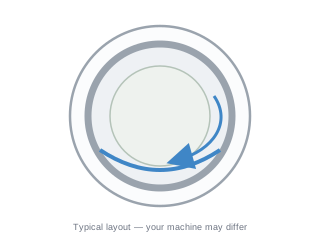
Peel back the lower fold of the rubber door seal and wipe it. Pull the detergent drawer right out and rinse residue. These are hygiene checks, not a drain repair.
Gunge collects in the lower fold of the door seal. Wipe it; do not cut or stretch the rubber.
Transit bolts and level feet
From the back, check the large bolts that lock the drum for transport have been removed. Rock the machine gently: all four feet should sit firmly. A walking machine on spin is often unmet feet or leftover bolts, not a “broken drum”.
Transit bolts unscrew from the back. Typical layout — yours may differ.
Stop and get help
These are the points where another cycle, another click, or a screwdriver makes things worse. ApplianceClinic is not a repair company and will not send an engineer to you.
Water and electricity together
Standing water around the plug, socket or flex: switch off at the consumer unit if you cannot reach a dry switch safely. Do not paddle while it is plugged in.
Burning, smoke or sparks
Stop the machine, isolate power, and do not run another cycle. A hot-electrics smell is not the same as a first-use “new heater” smell — if you see smoke or scorch marks, stop.
Repeated RCD or breaker trips
A machine that kills the RCD when it heats or fills should stay unplugged until diagnosed. That is not a “reset and hope” fault.
Know your appliance
Names you may hear in a diagnosis, in plain language. This is identification, not a strip-down guide.
Pump and filter
The filter is the customer-accessible strainer; the pump is the motor that pushes water out. Clearing the filter is a check. Replacing a seized pump is a repair.
Door lock (interlock)
A small switch in the door frame. It tells the machine the door is shut and holds it closed. Waiting for the delay to release is safe; opening the cabinet to swap it is not a first step.
Inlet valve
Electrically opens to let water in. You can check the tap and hose. Testing the valve with a meter is an engineer job.
Drain hose and standpipe
The hose must rise and sit in the standpipe with an air gap. Pushed too far down, it can siphon or smell. The U-bend belongs to the house, not the washer.
Find your model number
Open the door and look around the rim, or just inside the frame. Some brands put a second plate on the back. You need the model number (not just the marketing name on the front) before anyone can talk about a matching part.
Wipe condensation off the sticker before photographing it.
Include the make, model and any serial line in the photo.
If the sticker has worn away, the manual or purchase email sometimes still has the model.
When you start a diagnosis, use the camera button on the composer to photograph the plate. Conversations stay in your browser — they are not published as web pages.
Helpful video
A typical procedure. Access and parts vary by model — pause if yours looks different.
How to unblock a washing machine pump filter
Typical procedure for clearing a blocked pump filter. Switch off and drain first. Access varies by model. Video by How-To-Repair, embedded with their player — not an ApplianceClinic production.
Safety recalls and notices
UK Office for Product Safety and Standards notices that may affect washing machines. ApplianceClinic does not issue recalls — check the official record before you act.
The assistant is the same conversation as the homepage. Describe what you have already checked. It will not run in the background, and it needs a network connection.